

Doctors at Mass General Brigham health care system have developed an artificial intelligence (AI) tool that can estimate a person’s biological age and predict cancer survival outcomes from a single photograph of their face, according to a study published in The Lancet Digital Health.
Researchers trained the system on more than 40 million facial photographs covering different ages and ethnicities. The study examined how AI analysis of facial features can provide information about a patient’s health and potentially help doctors make decisions about cancer treatment.
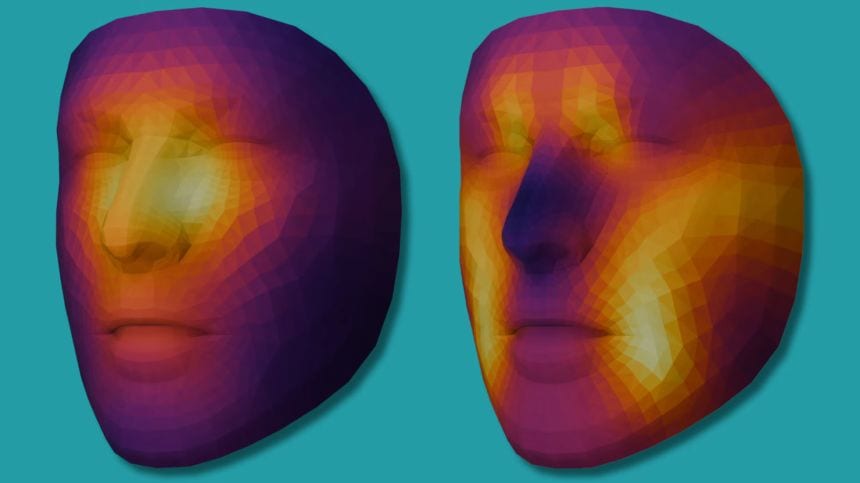
The researchers developed two tools from the same AI model: FAHR-FaceAge, which estimates biological age and predicts cancer survival, and FAHR-FaceSurvival, which predicts survival outcomes directly from facial photographs rather than using biological age as an intermediate measure.
Although both tools use the same underlying model, they identify different information from a patient’s face.
FAHR-FaceAge focuses on creases running from the sides of the nose to the corners of the mouth, the forehead above the eye sockets and the temples. FAHR-FaceSurvival analyses the area below the eyes and around the bridge of the nose.
Hugo Aerts, a co-senior author of the study, said that FAHR-FaceSurvival advances facial health recognition by learning to predict survival risk directly from photographs of cancer patients. He described the research as the first demonstration, to the researchers’ knowledge, of an AI model predicting cancer survival from a simple photograph.
The study also examined patients with cancer who received radiotherapy in the United States (US). During an average follow-up period of four years, patients whom FAHR-FaceAge assessed as looking at least five years older than their actual age had a 21 percent higher risk of death than the other patients in the group. Those assessed as looking at least five years younger had a 17 percent lower risk.
Aerts stated that the model’s technical foundation lies in learning general facial representations from more than 40 million images and adapting them to different health outcomes, including biological age and survival.
The researchers also found associations between lifestyle factors and facial ageing. Heavy alcohol use, drug use and smoking were linked to an older biological age in the AI analysis.
The researchers said that facial photographs could offer a low-cost way to support decisions about treatment, however, further research remains necessary before doctors can use the technology widely.
